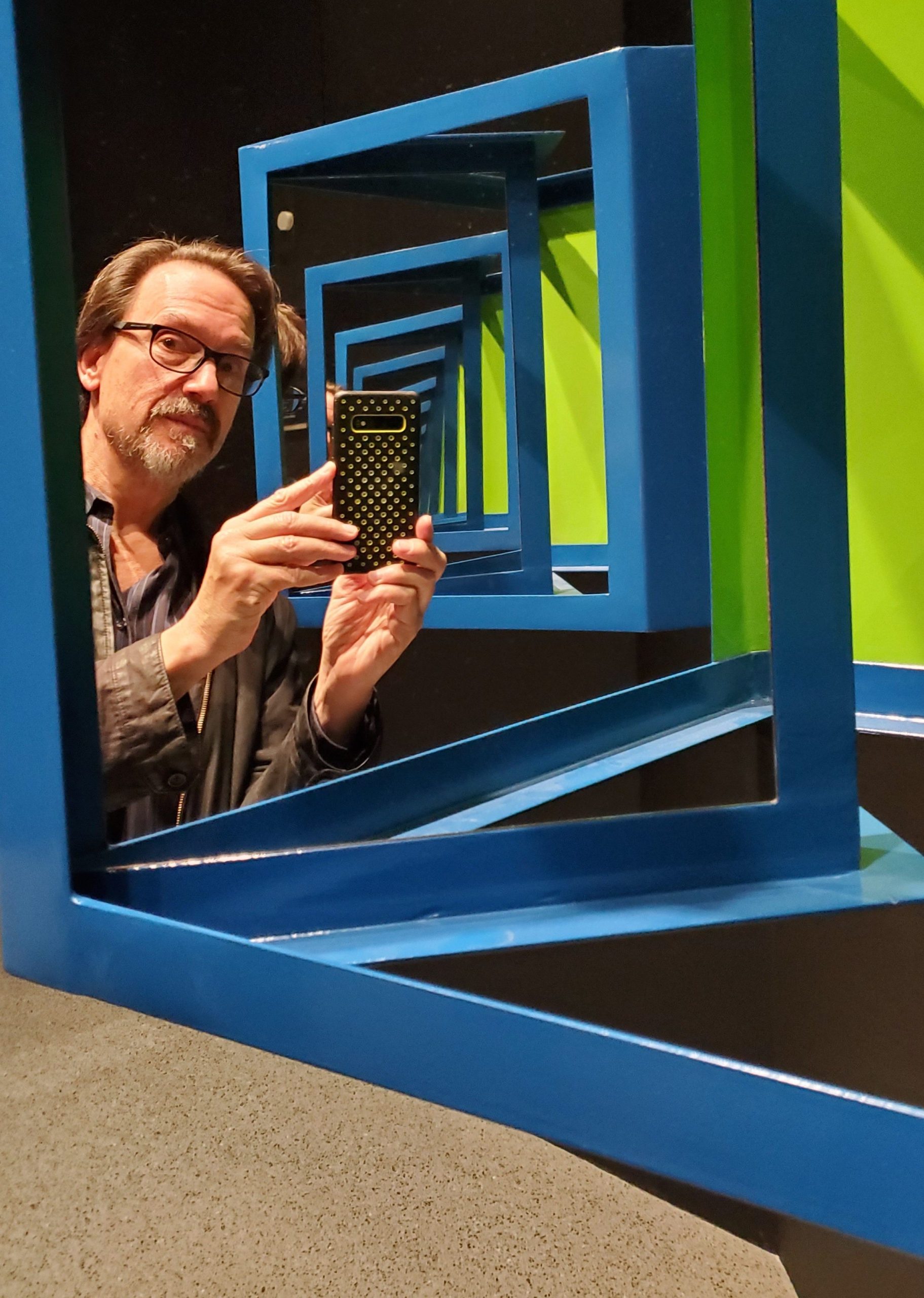
Mitchell B. Merback
William Arnell and Everett Land Professor & Chair
Contact Information
- [email protected]
- Gilman 172
- 410-516-6948
Research Interests: Later Middle Ages, Renaissance, and Reformation in Northern Europe
Education: PhD, University of Chicago
My art-historical work centers on northern Europe during the Later Middle Ages, the Reformation period, and early modernity more broadly, with the arts of Germany, Austria, the Low Countries, and France comprising my principal arenas for investigation.
Among the research problems that interest me, two have proven most durable: the role(s) art objects and visual culture play in the formation of historical subjects, and the phenomenology of the Christian devotional image. Together with an early interest in spectacles of violence and power, these preoccupations informed my first book, The Thief the Cross and the Wheel: Pain and the Spectacle of Punishment in Medieval and Renaissance Europe (Reaktion, 1999). Late medieval Crucifixion images were here set alongside the notoriously violent rites of criminal justice performed in town squares across Europe; likewise the techniques, shared between artists and executioners, for fashioning the punished body into an image. Broken, twisted, and sometimes inverted on their crosses, the two malefactors executed with Jesus on Golgotha lent their bodies, and their images, to these macabre re-imaginings of gospel history. I have continued to publish on aspects of the iconography of violence, the cultural history of pain expressions and experiences, and the visibility of holy blood in devotional contexts—all inherently interdisciplinary topics.
In my second book, Pilgrimage and Pogrom: Violence, Memory and Visual Culture at the Host-Miracle Shrines of Germany and Austria (University of Chicago Press, 2013), I analyze the role played by anti-Jewish myths, accusations, and persecutions in the formation of Christian pilgrimage shrines to the Holy Blood (Heilig Blut) throughout the German Empire before the Reformation. An exercise in historical anthropology based on archival work, site examinations, and the examination of surviving objects and legends, Pilgrimage and Pogrom shows how the architectural spaces, altarpieces, relics, votive objects, and printed propaganda associated with these shrines worked in concert to shape popular perceptions of sanctity. Another contribution to understanding art's multivalent role in the Christian-Jewish encounter is the volume I edited in 2008, Beyond the Yellow Badge: Anti-Judaism and Antisemitism in Medieval and Early Modern Visual Culture (Brill, 2008). I continue to write on key aspects of premodern pilgrimage, notably the place and function of narrative votives in German piety and popular culture.
My third book took me in a quite different direction. Perfection’s Therapy: An Essay on Albrecht Dürer’s Melencolia I (Zone Books, 2017) reopens the casebook on art history's most enduring image of creativity in paralysis, Albrecht Dürer's master-engraving (1514), depicting a winged genius seated in solitary reflection, surrounded by tools, measuring instruments and allegorical creatures. Despite the failure of a century's efforts to wrest a conclusive interpretation from the artist's vision, Melencolia I still looks to many like a puzzle awaiting a solution. Against this tradition, the book explores the likelihood that there is no enigmatic message to unravel "inside" the image, no secret "Dürer Code" to break, and goes on to recuperate an overlooked potential for images that challenge, perplex, and exercise the mind. I also reinterpret Dürer's own predilection for self-therapy, seeing it as part and parcel of his vocation as a Christian painter, a universal healer, and a supplier of "soul-service" to his public and friends.
Slated for publication in early 2027, The Consolation of Wisdom: Meditation, Dialogue, and Devotion in the Art of Albrecht Dürer and His Contemporaries addresses a hitherto unrecognized category of premodern European art: the Christian devotional image as philosophical image. By this I principally mean holy portraits that invite the beholder to prayer, virtual dialogue, inner reflection, and "creative cognition" by mirroring the meditative stance one is meant to assume when gazing at them. One such is Dürer's double-sided icon of Christ as the Man of Sorrows (Karlsruhe, Kunsthalle), a fascinating double-sided panel which serves as the project's central thought-image. The book juxtaposes a new iconographic history of the meditating Christ of Pity with an account of the scriptural, poetic, and philosophical history of Holy Wisdom personified. Additionally, with an eye on the work's vibrantly painted verso side, the book also sets forth a new approach to painted abstractions done in imitation of patterned hardstones, ascribing to these trompe l'oeil fantasies a special kind of meditative attraction and function.
Two other project in the works are Recognitions: The Poetics of Tragic Witness, a set of interlinked investigations into the dynamics of narrative disclosure; and Radical German Renaissance?, which revisits the careers of Sebald and Barthel Beham, two Nuremberg artists whose lives intersected in fateful ways with the sectarian movements of the Reformation. Portions of both projects have appeared in Renaissance Quarterly, Art Bulletin, Art History and several edited volumes. I am also currently writing, lecturing, and publishing on Pieter Bruegel the Elder, with a focus on his associations with the Antwerp humanists and the supra-confessional Christian philosophy they pursued. My goal is to revisit the impact of Christian natural-philosophy on Bruegel's art in terms of how it shaped the design of his pictures. This has led me to reinterpretations of several of the artist's "encyclopedic allegories," notably Children's Games, and an exploration of ira, anger, as a theme running visibly and invisibly throughout the painter's oeuvre.
Before earning my MA and PhD degrees in art history at The University of Chicago (with a dissertation on Lucas Cranach the Elder, 1995), I trained as an outdoor sculpture conservator under the mentorship of Virginia Norton Naudé at the Pennsylvania Academy of Fine Arts in Philadelphia, my hometown. Before that I attended the New York State College of Ceramics at Alfred University, where I studied sculpture and vessel-making with Tony Hepburn, Val Cushing, William Parry, and Wayne Higby, earning my BFA in 1985. One way or another I've kept my hands in clay since the late 1970s, and expect to develop courses in the history of modern ceramic art in the coming years.
Selected Projects
"O vos omnes: Recognition, Emotion, and the Passerby Topos in Northern European Art around 1500," in Motus mixti et compositi: The Portrayal of Mixed and Compound Emotions in the Visual and Literary Arts of Northern Europe, 1500-1700, ed. Karl Enenkel and Walter Melion (Leiden and Boston: Brill, 2024), 369-409.
"Masters of Melancholy," review article, Saturn and Melancholy: Studies in the History of Natural Philosophy, Religion, and Art by Raymond Klibansky, Erwin Panofsky, and Fritz Saxl, new edition, ed. Philippe Despoix and Georges Leroux (Montreal: McGill-Queen’s University Press, 2019), in Studies in Iconography 43 (Spring 2022): 223-37.
"Spritzefragen: Dürer's Clyster Reconsidered," in Das subversive Bild. Festschrift für Jürgen Müller, ed. Bertram Kaschek, Teresa Ende, Jan-David Mentzel, and Frank Schmidt (Berlin: Deutscher Kunstverlag, 2022), 99-117.
"Immanence and Intercession: Rooted Sanctity and the Creglingen Marienaltar," in Riemenschneider in Situ, ed. Gregory Bryda and Katherine M. Boivin (Turnhout: Brepols, 2021), 197-229.
"Violence and the Force of Representation in European Art," in The Cambridge World History of Violence, 4 vols. [vol. 2: 500-1500, ed. Matthew S. Gordon, Richard W. Kaeuper, and Harriet Zurndorfer (Cambridge and New York: Cambridge University Press, 2020), 645-75.
"Pain and Memory in the Formation of Early Modern Habitus," Representations 146, Special Issue: The Social Life of Pain, ed. Rachel Ablow (Spring 2019): 59-90.
"Lob und Danck: On the Social Meanings of Votives in German Pilgrimage Culture," in Agents of Faith: Votive Objects in Time and Place, exhib. cat., ed. Ittai Weinryb (New York: Bard Graduate Center Gallery, 2018), 159-81.
"Between these Two Kingdoms: Exile, Election, and Godly Law in Sebald Beham's Moses and Aaron," in Art History 40, no. 2 (April 2017) [ = Special issue: "Art and Religious Reform in Early Modern Europe," ed. Bridget Heal and Joseph Leo Koerner]: 286-311.
Perfection's Therapy: An Essay on Albrecht Dürer's Melencolia I (New York: Zone Books, 2017).
"'Return to Your True Self!': Practicing Spiritual Therapy with the Spiegel der Vernunft in Munich," in The Primacy of the Image in Northern European Art, 1400-1700: Essays in Honor of Larry Silver, ed. Debra Cashion, Ashley West, and Henry Luttikhuizen (Leiden and Boston: Brill, 2017), 362-77.
"Pro remedio animae: Works of Mercy as Therapeutic Genre," in Peiraikos' Erben: Die Genese der Genremalerei bis 1500, ed. Birgit Ulrike Münch and Jürgen Müller (Wiesbaden: Reichert, 2015), 97-124.
"Recognitions: Theme and Metatheme in Hans Burgkmair the Elder's Santa Croce in Gerusalemme of 1504," Art Bulletin 96, no. 3 (Sept. 2014): 288-318.
Pilgrimage and Pogrom: Violence, Memory, and Visual Culture at the Host-Miracle Shrines of Germany and Austria (Chicago, 2013).
"The Man of Sorrows in Northern Europe: Ritual Metaphor and Therapeutic Exchange," in New Perspectives on the Man of Sorrows, ed. Catherine R. Puglisi and William L. Barcham (Kalamazoo, MI: Medieval Institute Publications / Western Michigan University, 2013), 77-116.
Judaism and Christian Art: Aesthetic Anxieties from the Catacombs to Colonialism, ed. Herbert Kessler and David Nirenberg (Philadelphia: University of Pennsylvania Press, 2011).
"Nobody Dares: Freedom, Dissent, Self-Knowing and other Possibilities in Sebald Beham's Impossible," Renaissance Quarterly 63, no. 4 (Winter 2010): 1037-1105.
Beyond the Yellow Badge: Anti-Judaism and Antisemitism in Medieval and Early Modern Visual Culture, ed. Mitchell Merback (Leiden and Boston: Brill, 2008).
“Fount of Mercy, City of Blood: Cultic Anti-Judaism and the Pulkau Passion Altarpiece,” Art Bulletin 87, no. 4 (Dec. 2005): 589-642.
The Thief, the Cross and the Wheel: Pain and the Spectacle of Punishment in Medieval and Renaissance Europe(Chicago, 1999).
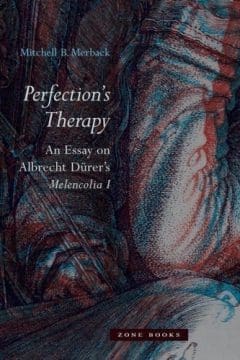
Perfection’s Therapy: An Essay on Albrecht Dürer’s Melencolia I
- author
- Zone Books, 2017
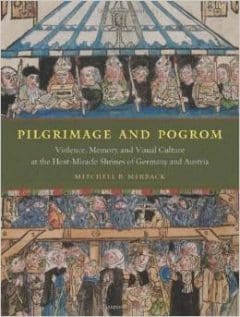
Pilgrimage and Pogrom: Violence, Memory, and Visual Culture at the Host-Miracle Shrines of Germany and Austria
- author
- University of Chicago Press, 2013
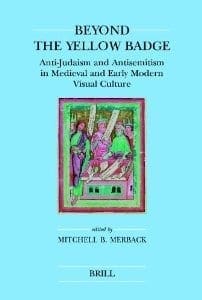
Beyond the Yellow Badge: Anti-Judaism and Antisemitism in Medieval and Early Modern Visual Culture
- editor
- Brill Academic Publishers, 2008
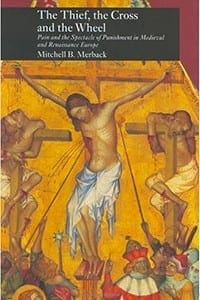
The Thief, the Cross and the Wheel: Pain and the Spectacle of Punishment in Medieval and Renaissance Europe
- author
- University of Chicago Press, 1999